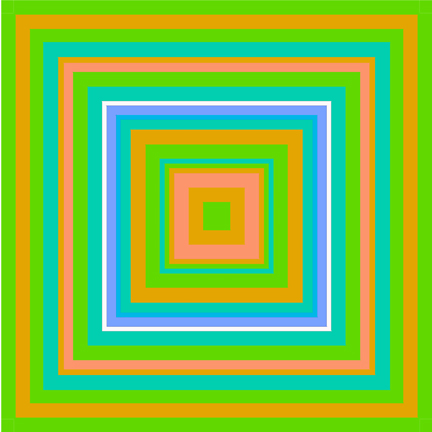
Monday, July 18, 2016

MOZART

I know I am jumping ahead quite a bit to get to Mozart after Bach, perhaps I will go back and catch the several geniuses between at a later date.

This is probably Mozart's first Minuet.  Since he composed his first Symphony at the age of 8 it is not impossible that it was composed when he was 6.

How can that be?  My tentative conclusion is that music is actually floating around somewhere in the ether and when a young brain is primed and open for it, that brain catches it.  Considering that once it is caught and written down and performed it moves a great deal of people this doesn't seem so far fetched.  Why then should some composers' work move people more than others?  Perhaps the very best composers have a superior catching system?

What do you think?

Here is a link to the sheet music and if you click on"listen" you can hear the music.

I think the bottom part is so beautiful that it could easily stand alone.


Top part of Minuet


Bottom part of Minuet


2 parts together


Saturday, July 9, 2016

THE GOLDEN KEY

Yesterday I mentioned that the color emphasis in all the music I have translated seems to be on the golden mean.
Here is a lovely video about ideal proportions.

https://youtu.be/_jEaEtSRMCc

Friday, July 8, 2016

Albers and Fugues

While thinking about fugues and what Albers had to say about how one color changes another I began to wonder if staggering colors in a sequence would hold the colors together in the same way that it holds the notes together in time.

This is an example from Albers' color course of the way one color can be changed because of what surrounds it.

The small color in the center of the two adjacent squares is the same.  In this example you can see the way our perception of color is changed by the colors surrounding it but it is always happening no matter how subtle it may be.  When two colors touch, our perception of them changes.


Here is one of the first wall hangings I created.  It is now in the permanent collection of the Philadelphia Museum of Art.  I am showing it because it illustrates very well how one color changing another can hold a sequence of colors together.


MYSTIC BLUE
60" x 60"
cotton fabric, hand sewn

Here is an inset to show the way the colors change.  The solid colors change the prints underneath.  This is not a great photo as it is not only a change in the amount of black and white but a color shift as well.


Thursday, July 7, 2016

Bach Fugue and Albers

I did translate the first 7 measures of a Bach Fugue #XX.  Several problems immediately became apparent.  The first being that of course Fugues don't come to a tidy place to stop after a few measures like most music.  In fact the very essence of a Fugue is that is goes on and on without a pause and yet we remain interested because of its masterful construction.  I did find a place to pause after 7 measures but it was not something Bach would have wanted to happen.

The second problem is that fugues often begin with the soprano line alone and only after several measures does the bass line enter the scene.  This leaves a lot of black - the color I chose for rest - at the beginning of the piece.

HERE is a link to the Fugue I chose so you can hear the music. (click on 'listen')  You'll notice there are a lot of small lines of color as the fugue moves along at a rapid clip.  You might also notice that in this piece as in the others I have translated into color there is a pretty clear accent on the golden mean.

Soprano Voice


Bass Voice


 Two voices together


Tomorrow what I learned from Fugues that translated to my work with fabric.


Wednesday, July 6, 2016

BACH

Finally we are up to Bach in my very truncated history of music.
I have chosen a simple piece, THE MINUET IN D minor as it is easy to see the color relationships and it is a simple but satisfying 8 measures.
Go HERE to listen to the whole piece.

Top part


Bottom part


Together


It would not be fair to present Bach without a fugue and in fact the ideas that hold a fugue together inspired a great deal of my work in fiber so next post I will present a fugue.  I have not created one yet so it may take a while.  Meanwhile I will search for a simple but beautiful one to work on.


Thursday, June 30, 2016

Purcell

The next composer I would like to translate into color is Henry Purcell.  Working around the same time as Corelli, he was none the less using more notes and a more complicated palette as a result.  Corelli was in Italy and Purcell in England.  Did they ever get to hear each other's music?  Unlikely.  How things have changed.

I have chosen to "translate" the first 8 measures of Purcell's Festival Rondeau, this time C is Green.


Go HERE to listen to the music.

Here is the top part.


 Second part.


Third part.


4th part

Whole 8 measures of Purcell's Festival Rondeau


Wednesday, June 22, 2016

Bach

Sorry I promised Mozart for today but he will have to wait for some of his predecessors to take the stage and show their colors.

By the time Arcangelo Correlli was born in 1653 musical notation was an established way of sharing compositions.  Music had gotten more complicated with more rhythmic variation.  Composers by this time are using a greater range of tones instead of confining themselves to two octaves they are delving into many more highs and lows.  In this Sonata by Corelli the top voice alone spans more than an octave.  And the bottom voice has the piece complete three octaves.  You will notice I have faded each note into black.  I decided to do this as when each note is played it fades after it is played.  In yesterday's piece the notes are held until they blend together but in this performance the notes are clearly defined.
To hear the whole piece go here and click on "listen".

                         
top part of first 8 measures of Corelli's Sonatina in A Minor


Bottom Part of 8 measures of Corelli's Sonatina in A Minor


Two parts together


Tuesday, June 21, 2016

Color Music

Why does the music look as it does?


You see the sheet music so you know that the first note of the piece is going to be
high D or Light purple so that goes in the center and it will take up two spaces, the next note C will take up two spaces as well, and the next, but then there is a little variation and the C or light red will only take up one space with the B taking up a half space and so it goes.  The amount of space each color takes up is determined by the amount of time each note is played.  So in affect the sheet music allows us to see a color pattern.

The top part is then placed with the bottom by dividing the parts into equal parts.  In a large piece (60" square or more) I used a 3/4 inch strip of color because it seemed to mix in the eye best when standing the usual distance from the work.  In these smaller pieces I have used very small strips of color.  Today's version has smaller strips than yesterdays and I think it works better.  I also like the rests in grey rather than white as it is more of a 'rest' instead of a stop.


PANGE MELOS LACRIMOSUM
rests in grey, smaller divisions of color

I did think these colors were beautiful together.  They were not anything I would have chosen but they really sang.  And so I began to see what other music would look like using this system of translation.

Tomorrow Mozart.

Please pass this along to anyone you think might be interested.


Monday, June 20, 2016

MUSIC

Back in the attic it was time to try a piece of music and see if the colors were beautiful together.  I decided to start with the first music I could find that was written down.  At this time I did not have a computer as it was in the 70's so I had to go to the library and see what I could see.  It was all very interesting and I discovered that although there probably was music in Egypt and Rome there is no recorded history of notation that has been found.  There is however notation from the Greeks. This is one of the most marvelous things about music, that there is notation that allows us to see exactly what notes any given composer has in mind from hundreds of years ago and reproduce the music today.

Here is eight measures of the music I chose and the translation of all the words.  You might like to listen to the music as you read the words.  You'll notice that all the notes are very close in tone, nothing very high or very low and the notes flow into each other without a pause.  This is typical of early music.  It holds together because of the tones, rhythm is not very important.

https://youtu.be/FZK4OFPEqEg

Compose a tearful melody,
weeping in elegy;
a time for lamentation has come,
a time that steals joys.
At this eclipse sorrow’s night
distorts what we see;
Let sadness rule, for the
cause of sorrow stands in the watchtower.
The star of the Rhine
casts Latium into ruins;
the star tumbles, and the star’s fall
holds the lands in darkness.
The truly Italian region
lies concealed, afraid to be seen,
For darkness is the friend of sin
and crime seeks his old haunt.
O what a definitive demonstration
of the falsity of the world!
Through experience Truth proves
what the world is;
it delights in disasters
and is constant in its inconstancy;
Death, the prince of this terrible law,
rules without pity.


Top notes of Tange (rests are white)


Bottom of Pange


Whole Pange Melos Lacrimosum

I have taken the liberty of softening the edges of the colors a bit to echo the way the music  is performed.


https://youtu.be/FZK4OFPEqEg

Friday, June 17, 2016

THE SCALE OF RED

Now that the Plein Air painting experience is over I can get back to the attic where I was thinking about how to paint music.

I had my keyboard ready to go.  The problem that had me thinking so long was how to represent something that happens in time.  Notes touch only the one before they occur and the one after that.  If color interaction is what is going to create color music and there is any relationship between musical vibrations and color vibrations, then the way the colors interact is key.  I began with a scale.  I placed the first note in the middle, a low C or dark red, the second note D or violet I placed around C so that it would only touch C.  The next note E or blue went around D so that it would only touch C and the next note E or blue green. And so it goes up the scale with each note/color touching only the one before it and the one after it.  This way of arranging the colors also forces the eye to the beginning - the center - and out to the edge - the end.

The colors are very close in tone, i.e. the amount of white and or black they contain, but do get slowly lighter as they move up the scale.

Since we are operating in space, not in time, we see the whole scale, not just one color at a time.  We see how all the colors relate to each other.  We don't have to remember the colors as we do when listening to notes.  Anything in time relies on memory.  A representation of any event in space does not.  We can look at it for as long as it pleases us.


The Scale of Red


Monday, June 13, 2016

Plein Air Painting

It was great to see those of you who stopped by yesterday.  They were refreshing moments in my frustrating day.  I didn’t paint a prize winning painting - not even I thought so.   I did learn a lot however and had a delicious mint chocolate chip cone to reward myself for trying.

Things I learned upon reflection in case you want to try your hand at plein air painting.

1. Do not under any circumstances paint in the sun. - I should know this as I have many very dark paintings that were a surprise to me when I brought them in the house.  The painting I finished was not too bad in the sun but had no life at all in normal light.
2.  Always be ready with a spare prepared canvas with no drawing on it so you can paint anywhere.  I was very well prepared for two sites both of which turned out to be impossible because of either sun, wind or a car in the way.
3.  Have everything nailed down in some way.  Most of my frustration had to do with being covered in oil paint a lot of the time as my palette kept blowing onto everything.
4.  Only enter competitions if you are feeling masochistic....or the prizes are really big!

The painting below is not the one I completed yesterday (that one is not dry yet) but another from Chestnut Hill that I painted last week.
Now I think the face in the window is me looking out on Germantown Avenue wondering why those people are out there on the street struggling with heat, wind and oil paint.


FACE IN THE WINDOW
Nancy Herman
9" x 12"
oil on canvas board

Saturday, June 11, 2016

YOUR PACKAGE HAS ARRIVED


YOUR PACKAGE HAS ARRIVED
Nancy Herman
9" x 12"
oil on canvas board

Those who deliver our packages and our mail are an important part of every day that we can take for granted.  This guy is the star of the show.

Another painting from Chestnut Hill completed this week in preparation for the Plein Air Festival tomorrow.  Check out the Festival tomorrow from 10:00 to 3:00 all up and down Germantown Avenue with some special events and 40 artists trying desperately to finish a canvas.  I'm going to be working on a larger than usual piece just to keep things interesting.  I'm off today to buy some big brushes.

Friday, June 10, 2016

SHADOW PLAY


SHADOW PLAY
Nancy Herman
oil on stretched canvas
20" x 16"

This is one of the very old buildings to be found on Germantown Avenue in the heart of Chestnut Hill.  It is on the 8400 block on the East side of the street.  I will be painting on the West side this Sunday from 10:00 to 3:00 as part of the Plein Air Festival.  Come on out and watch artists trying to finish a painting in 5 hours while dodging sun, wind, cars, and people kibitzing.  Not for the faint of heart!

Thursday, June 9, 2016

FEEDING THE METER

Last you heard from me I was in the attic thinking about how to paint music.  Well for literary purposes I am still thinking about that.
In the mean time I have been getting ready for the Plein Air Festival in Chestnut Hill by painting scenes from the part of Germantown Avenue that I am assigned.  It is the stretch opposite Graver's Lane Gallery so I am in luck as I can duck in there to get cool if it is a scorcher.
The event will take place next Sunday from 10:00 to 3:00.  This is the rain date.  Not sure if there will be another rain date if it rains on Sunday.

Here is one of the paintings I have been working on to get ready for the big day.


FEEDING THE METER
Nancy Herman
9" x 12"
oil on canvas board


Friday, May 27, 2016

THE COLOR OF MUSIC 4


After I graduated from the University of Pennsylvania in 1974 I went into my third floor and spent a lot of time thinking about how I was going to go about making colors do what musical notes do so well. 

ATTIC WINDOW
Nancy Herman
8" x 6"

I decided to see if I could somehow “translate” music to color and see if the colors made any sense to me.  Were the results beautiful or not basically.  I had already constructed my keyboard.  I placed red in the C position because red and green are in the middle of the spectrum in terms of how light they are.  My choice of red over green was arbitrary, but years later I read that Sir Isaak Newton also associated red with middle C, so at least I was in good company.  As we will see later on it is more important that the colors are tuned in a slow progression from dark to light than that any one color is in the position of C.


Notice how red and green are about the same tone or shade.  (These terms apply to the amount of light a color reflects)  Yellow has a lot of light and purple keeps its light to itself.

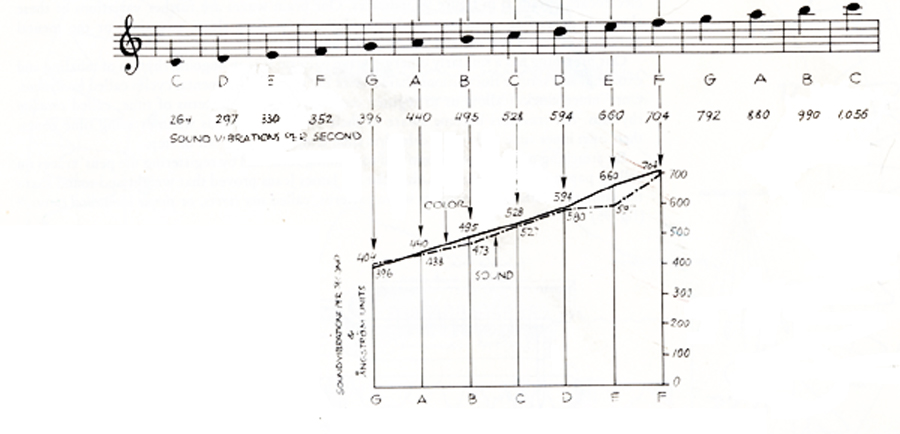
NEWTON'S DIAGRAM OF COLOR SOUND RELATIONSHIP

to be continued....

Please pass along to anyone you think may be interested.

Thursday, May 26, 2016

THE COLOR OF MUSIC 3

So you can get an idea of how one color changes another, here is an exercise from the Josef Albers course THE INTERACTION OF COLOR. The two small squares are exactly the same color.  The background color changes our perception of them.   The one on the left seems darker than the one on the right and the one on the right also seems to have more of a yellow tint.


tomorrow...getting started in the attic.

Please pass this along to anyone you think might be interested.


Wednesday, May 25, 2016

THE COLOR OF MUSIC 2


Although there was never a time in my life that I was not making some form of art, after my four children were off at school, I decided to go back to college to get my degree and see what I could see that would inform my work.

At that time at the University of Pennsylvania they taught Josef Alber's course the interaction of color.  Neil Welliver, then the head of the department of Fine Arts went to Yale where Albers taught.  As a result the thrust of the department was a combination of the Bauhaus courses of Albers and painting outside from nature.  Welliver painted outside in Maine.  My instructor in painting was Rackstraw Downs who paints very large panoramic views of New York while sitting on the street.  I have been painting nature and examining color ever since.

In the Alber's course it is necessary to see the way one color changes another when they are juxtaposed in order to complete various exercises.  It is really the only class in art I have ever taken that taught something that is not subjective.  You see it or you don't,  but it really does happen.

This changing color felt like music to me.  Could there be a way to present colors in a sequence that would move the emotions the way music does?


Gould's Hill
Neil Welliver


80th Street and Broadway
Rackstraw Downs


....to be continued

Please share with anyone you think might be interested.


Tuesday, May 24, 2016

The Color of Music

People have asked me how I arrived at my ideas about color and music and what inspired me to spend so much time on this project.  So I here we go.  A lot of this material is covered in my book IF C IS RED, with many illustrations, but this is a more personal story.

My mother was the youngest of three sisters.  The oldest played the organ and painted, the second had a beautiful singing voice and painted.   My mother, although she played the piano and sang, never felt she measured up to her older sisters.  She had two unhappy marriages, and although she finally married someone who was just right for her, most of my time growing up was spent trying to cheer her up.  She was thrilled that I showed some talent at painting.  I was pretty much a failure at playing the piano however.  Is it any wonder then that I ended up trying to make art out of music?  This was certainly not a conscious decision but it does seem like a probable underlying motive.


I love music and really had a strong longing to make color sing in the same way that music makes sound sing. The more I thought about this, the more it seemed to me that if color were arranged in the same way that notes are, that might be possible.  So I began by constructing a color keyboard.


to be continued.....

share this with anyone you think might be interested please.

Thursday, May 19, 2016

Brooklyn Building #2


BROOKLYN BUILDING #2
Nancy Herman
watercolor
9" x 12"

Everything dissolves into itself on a foggy day in Park Slope.


At auction on DailyPaintworks
http://www.dailypaintworks.com/artists/nancy-herman-1193/artwork

Tuesday, May 17, 2016

BROOKLYN BUILDINGS #1


BROOKLYN BUILDINGS #1
Nancy Herman
watercolor
9" x 12"

While cleaning out my studio I found a small treasure trove of water colors of street scenes of New York. I was surprised at how spritely they were.  When I get back to painting I am going to try water colors again.

This one is on auction at Daily Paintworks. Here is a link to my gallery there.
http://www.dailypaintworks.com/artists/nancy-herman-1193/artwork


Tuesday, April 26, 2016

ugallery

I am starting to sell paintings on various websites.  Here is a promo from Ugallery an Amazon affiliate.  When I attached this picture to the site I didn't realize it included the martini as it shows up very small when you choose it from your files.  I guess it is ok to be seen drinking a martini.  I am after all not always painting. See what you think.

http://blog.ugallery.com/post/143068934804/new-ugallery-artist-nancy-herman

Tuesday, April 19, 2016

Frogs

Yesterday was such a beautiful day I finally got outside and began weeding and planting.  While I was scooting along in my weeding chair/cart I noticed a small frog moving along with me.  He or she accompanied me all along the row.  Maybe I was stirring up some tasty worms or bugs, I don't know, but it was a pleasure to have his or her company.
Later in the day I walked to the post office through Merion park where spring is in full swing.  The new Redbuds are blooming as a greeting at the entrance.


As I was walking along the path by the creek I heard what sounded a lot like the mating call of an American Toad, the very creature I had earlier spent time with.

 What do you think is this a toad call and response?


Monday, April 18, 2016

IN THE BOUDOIR

I have been saving this wall hanging for a while because I really love it, but since I will soon be moving I am offering it for sale on eBay.  It is made of thin strips of unfinished satin, silk and cotton, woven together.  The loose threads further knit the colors together.  It is a fragile but lovely piece.  I will try to get a better picture of it on this sunny day.
Here is the eBay link
http://www.ebay.com/itm/-/191830921608?ssPageName=ADME:L:LCA:US:1123

Joanna's Garden


Joanna's Garden
Nancy Herman
20" x 20"
oil on stretched canvas

Here is another painting I have been saving that has to go.  It was done several years ago in the beautiful gardens of Joanna Reed, who until a year before she died at 85 could be found working in her garden at almost any time of the day. She gardened for more than 60 years at Longview Farm, creating what many considered a living work of art.

  bid on eBay
http://www.ebay.com/itm/-/191846761100?


postcards from Brooklyn

Since I have two children with families living in Brooklyn I often am inspired by the shapes and colors I find there to paint.  As a result I have just published another book in what seems to be developing into a series of Postcard books.  This one has lots of images and musings from Brooklyn and has just hit the news stands.  It is available from Amazon for only $15.00.